


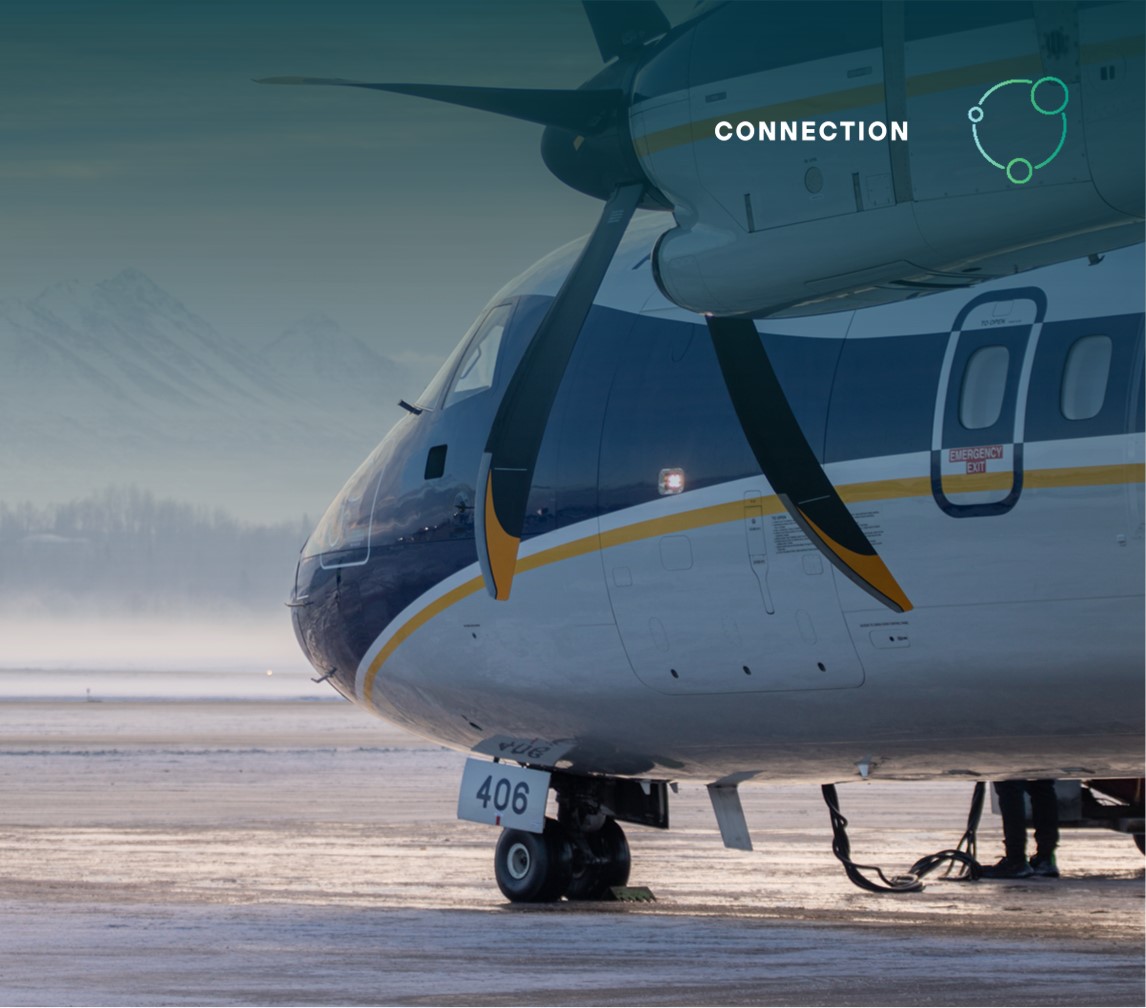
Connecting Alaska: Why Aleutian Airways Chose the ATR
Alaska presents some of the most demanding conditions for regional air transport anywhere in the world. Established in 2022, Aleutian Airways today has a fleet of five Saab 2000s, one ATR 42-600 and one ATR 72-600. As the airline prepares for its next phase of growth, CEO Wayne Heller explains why they selected the ATR as part of a long-term fleet strategy.
Regional aviation as critical infrastructure
Alaska is unlike any other aviation market in North America.
The state’s communities are spread across an area larger than France, Germany, Spain and Italy combined. Many are separated by mountain ranges, rugged coastlines and vast stretches of sparsely populated terrain. In numerous locations, road links are limited or non-existent, making air transport the most practical way to access healthcare, education, employment opportunities, government services and commercial centres. Serving these communities requires a careful balance of reliability, operational flexibility and cost efficiency.
Wayne Heller puts it simply: “Aleutian Airways exists to connect some of the most remote and underserved communities in North America. Operating in Alaska means aviation isn’t simply a mode of transportation, it’s critical infrastructure. Every day we’re moving people to jobs, medical appointments, schools, family events, and business opportunities. At the same time, we’re supporting industries that are essential to Alaska’s economy, including fishing, tourism, government services, and resource development.”
For many Alaskans, those connections are absolutely essential: “Unlike much of the Lower 48, there are places in Alaska where there is no practical road connection at all.”
“That’s why we view our role as larger than transportation. We are part of the infrastructure that helps these communities remain connected and thrive.”

Finding the right aircraft for a unique market
Against this backdrop, fleet decisions take on particular importance.
Far beyond distance, operating in Alaska means that airlines must contend with changing weather conditions, seasonal demand fluctuations and airports with varying infrastructure constraints. Fleet decisions therefore depend on finding the right combination of aircraft performance, operating economics and reliability.
“We look at several factors, but ultimately the aircraft has to fit Alaska’s operating environment.
First is performance. The aircraft must be capable of operating safely and effectively from the airports we serve, many of which present unique runway, weather, and terrain challenges.
Second is economics. We need an aircraft that delivers the right balance of capacity, operating cost, and reliability to support sustainable service in smaller markets.
Third is guest experience. Passengers expect comfort, dependability, and a product that reflects modern aviation.
Finally, we look closely at manufacturer support. Strong technical support, parts availability, and a long-term commitment to operators are critical when you’re flying in some of the most demanding environments on earth.”
Why the ATR stood out
As Aleutian Airways evaluated its long-term fleet strategy, the airline was looking for an aircraft that could strengthen existing operations while creating room for future growth.
“The ATR-600 represents a unique combination of efficiency, capability, and versatility. As we evaluated our long-term fleet strategy, we saw an aircraft that could allow us to serve existing markets more efficiently while also opening opportunities for future network expansion.”
For Aleutian Airways, the attraction was not a single feature but the overall fit between the aircraft and the realities of regional aviation in Alaska.
“The ATR offers the seat capacity we’re looking for, excellent economics on regional sectors, and a platform with a strong global track record.”
“We’re also attracted to the ATR’s passenger capacity and modern flight deck. These features help support both operational efficiency and a positive guest experience. Ultimately, an aircraft has to prove itself in Alaska, but the ATR incorporates several characteristics that align well with what we look for in this market.”
Just as importantly, the airline found a manufacturer willing to engage with the specific challenges of the Alaskan market rather than applying a one-size-fits-all approach.
“ATR demonstrated a willingness to work closely with us to better understand Alaska’s operational requirements.”
That dialogue reinforced Aleutian Airways’ confidence that the aircraft could support both its operational needs and longer-term ambitions.
“We’re focused on sustainable growth, and the ATR appears to provide a solution that aligns with both our operational and business objectives.”
And growth, for Aleutian Airways and the communities they serve, is not simply about adding routes. It is about ensuring that connectivity can be maintained sustainably over time. In that context, the ATR became a new tool to help the airline adapt capacity to demand, evaluate new opportunities and continue serving communities across Alaska.

Adapting capacity to demand, creating new opportunities
For a regional airline, the challenge is often finding the right aircraft size.
Some markets generate more demand than smaller aircraft can accommodate, while larger regional jets may be difficult to justify economically throughout the year.
“The ATR helps bridge that gap by providing meaningful passenger capacity while maintaining the economics required to serve smaller markets.”
“The ATR’s economics may allow us to evaluate opportunities that previously didn’t fit our business model. Each route is different, but having a highly efficient regional aircraft expands the range of possibilities we can consider.”
The ATR’s combination of capacity, efficiency and versatility also played a significant role in the airline’s broader fleet strategy, broadening the airline’s options.
“The Saab 2000 has been a great aircraft for us. It’s fast and exceptionally well-suited for many communities we serve down the Aleutian chain. The ATR is not a replacement for the Saab. Rather, it complements the fleet by providing additional flexibility. Having two aircraft types that excel in different mission profiles allows us to better match capacity and operating economics with market demand. The ATR gives us another option as we continue evaluating network opportunities and long-term fleet development. Together, they create a broader set of tools for serving Alaska efficiently.”
Investing for the long term
For Aleutian Airways, the ATR is ultimately part of a broader commitment to sustainable connectivity across Alaska. Asked about the challenges that come with leading an airline serving some of North America’s most remote communities, Heller returns to a single priority: ensuring Aleutian Airways is built for the long term.
“The biggest responsibility I feel is ensuring that we’re here for the long term. The communities we serve depend on us. Our team members depend on us. When you operate in Alaska, reliability isn’t just a business objective; people are counting on you for important parts of their lives. So what keeps me awake at night is making sure we’re making the right long-term decisions, investing in the right people, selecting the right aircraft, and building an airline that will continue serving Alaska for decades to come.”
“When transportation becomes more reliable and affordable, communities benefit. Aircraft like the ATR can help create that connectivity by linking people and businesses to larger economic centers. The result is better access to employment opportunities, essential services, and economic development. At the end of the day, we’re not just moving passengers. We’re helping support the communities that depend on air service every day.”
As ATR’s presence in North America continues to grow, Aleutian Airways offers a compelling example of how regional turboprops can help connect remote communities, support local economies and create opportunities in one of the world’s most challenging operating environments.
Share this article