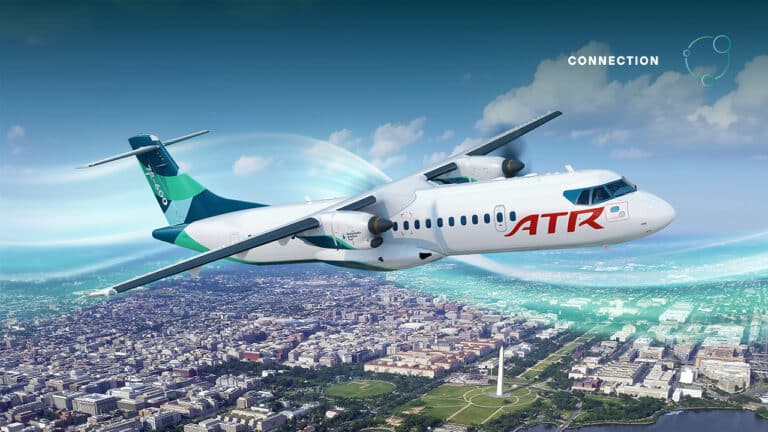


A vast nation with underserved communities and a regional aviation network at a turning point: why the US represents one of the most significant opportunities for turboprop connectivity today.
Overview
A network built for scale but leaving communities behind
The United States has the world’s most extensive airport infrastructure, with nearly 3,300 public airports identified in the National Plan of Integrated Airport Systems, more than 500 of which serve smaller communities. Yet for millions of U.S. residents, meaningful air connectivity has been steadily shrinking.
Air service to 570 small community airports in the US generates $134 billion in economic activity and supports 1 million jobs annually. But over 800 routes have been discontinued in the past 25 years, and 1 in 10 regional airports is now at risk of losing all air service. This is the paradox of regional aviation in the United States of America: extraordinary infrastructure, insufficient connectivity.

500+
NPIAS regional airports serving smaller communities

$134B
Annual economic activity generated by regional airports

1M
Jobs directly supported by regional aviation

800+
Routes discontinued over the past 25 years
What is Regional Mobility and why does it matter?
To understand what regional mobility is and why it matters for economies and communities, see our global overview. https://www.atr-aircraft.com/regional-mobility/
The challenge
A Connectivity Crisis Decades in the Making
Airline consolidation, ageing fleets, pilot shortages, and contractual scope clauses have combined to hollow out the U.S. ‘s regional network. Between 2000 and 2019, the share of domestic flights between major hubs grew by nearly 6%, while small communities saw their combined share fall by over 7%, a loss of more than 1.6 million scheduled departures.
The consequences are felt most acutely in rural and remote communities where people are cut off from specialist medical care, students unable to reach universities, and local businesses are struggling to attract talent or serve distant markets. The current trajectory is not sustainable for either the communities or the nation’s broader economic cohesion.

The opportunity
Modern Turboprops: The Key to Restoring Regional Connectivity Across the United States of America
Modern turboprop aircraft offer a proven, commercially viable path to restoring regional connectivity across the United States. Specifically engineered for routes under 500 nautical miles, which account for the vast majority of underserved city pairs, next-generation turboprops bring a fundamentally different economic equation to regional operations.
With 300 50-seats regional jets retiring in the next decade and 12 million passengers within reach of new point-to-point routes, the timing is clear. Replacing ageing jets on routes under 500 nautical miles with modern turboprops could reduce CO₂ emissions by 28%, equivalent to removing one million cars from the road annually.
ATR’s aircraft offer 30% lower fuel and operating costs versus current regional jets, with up to $2M in additional profitability per aircraft per year. On point-to-point routes versus hub connections, fuel savings of up to 50% are achievable, while dramatically cutting journey times for passengers.




ATR in the United State
Present, Prepared, and Ready to Deliver
ATR has significantly deepened its engagement with the US market, establishing relationships with key airlines, lessors, regulators, and policymakers. In September 2025, ATR held its first Regional Air Connectivity Summit in Washington D.C., attended by key stakeholders from across the US aviation ecosystem, alongside a prominent presence at the Regional Airline Association Leaders Conference.
With an extensive survey of mobility needs and new route opportunities developed in close collaboration with US partners, including Georgia Tech’s Aerospace Systems Design Laboratory and Seabury Airline Strategy Group, ATR has positioned itself as the partner of choice for the next generation of US regional connectivity.