



Reinvigorating Regional Air Connectivity in the United States
The United States of America is the world’s largest domestic air travel market. Every year, around 800 million passengers take to the skies across the country, a figure that has grown by more than 35% since 2005.
And yet, behind this impressive headline lies a quieter story.
Over the same period, regional routes under 300 nautical miles that, historically, have had sufficient demand to justify a service of at least 10 flights a week, have declined by 77%, according to data from US-based consultancy Seabury ASG. As explained by Seabury’s Managing Director Rich Scheff, “The markets we assessed revealed a drop from 5.1 million passengers to 1.2 million over 2005-2025. If the sector had performed in line with the rest of the US domestic market, it should have grown to 6.9 million.”

A shift from sky to road
The impact has been cumulative. With more than 800 routes closed, the very lifelines that connect smaller communities to major hubs disappeared, one by one, gradually reshaping mobility across the country. Passengers were forced to adjust. Many turned to their cars to reach larger airports or alternative destinations.
For rural communities and smaller cities, this shift is more than an inconvenience, it is a question of accessibility, economic vitality and equal opportunity.
A recent study by Georgia Institute of Technology, “Data-Driven Investigation of Re-Fleeting Scenarios for the 50-Seat Regional Aircraft Segment” led by Dr. Cedric Justin, adds further urgency to the discussion. Around 10% of regional airports are now at risk of losing commercial service entirely. The reason? Their reliance on an ageing fleet of 50-seat regional jets.
The ageing RJ50 fleet
Today’s RJ50 fleet, primarily the MHIRJ CRJ100 / CRJ200 and Embraer ERJ135 / Embraer ERJ145, numbers roughly 300 aircraft, down from nearly 1,400 at its peak in the early 2000s.
With an average age of 23 years and no new-production aircraft in this category, their trajectory is clear. Dr. Justin’s retirement modelling uses observational data from aircraft already retired to predict when the remaining fleet could disappear.
As he explains: “One of the biggest assumptions used in our model is the flight cycles at retirement for the remaining in-service fleet. We use 47,500 flight cycles for the CRJ100/200 fleet, for example, since data from over 400 aircraft show that 100% of them had retired by that time.”
The results indicate that the combined CRJ100/200 and ERJ135/145 fleet could disappear by 2035.
Including the converted CRJ550 aircraft may extend the timeline slightly, perhaps to 2040, but the overall conclusion remains unchanged: retirement is inevitable.
The question is not if these aircraft will leave service. It is when, and what will replace them.
Addressing the re-fleeting challenge head-on
Despite this analytical backdrop, much of the industry’s conversation continues to focus on whether the RJ50s will retire at all.
Maintaining ageing aircraft through additional MRO support may slow the decline, but it will never provide a permanent solution to the decline in RJ50 capacity. The E175 is often proposed as a solution. However, even if the economic challenge of operating this aircraft on a thin RJ50 route could be overcome, adding more units into these fleets is not possible in all cases due to scope clause limitations.
This is where the conversation must evolve.
Turboprops: A Path Forward
ATR envisions an air system where US regional networks are served by the most efficient and economical aircraft on any given routes. Which necessarily means a combination of both turboprops and regional jets to serve the variety of routes and needs across the country. Who said it had to be either one or the other? Not us.
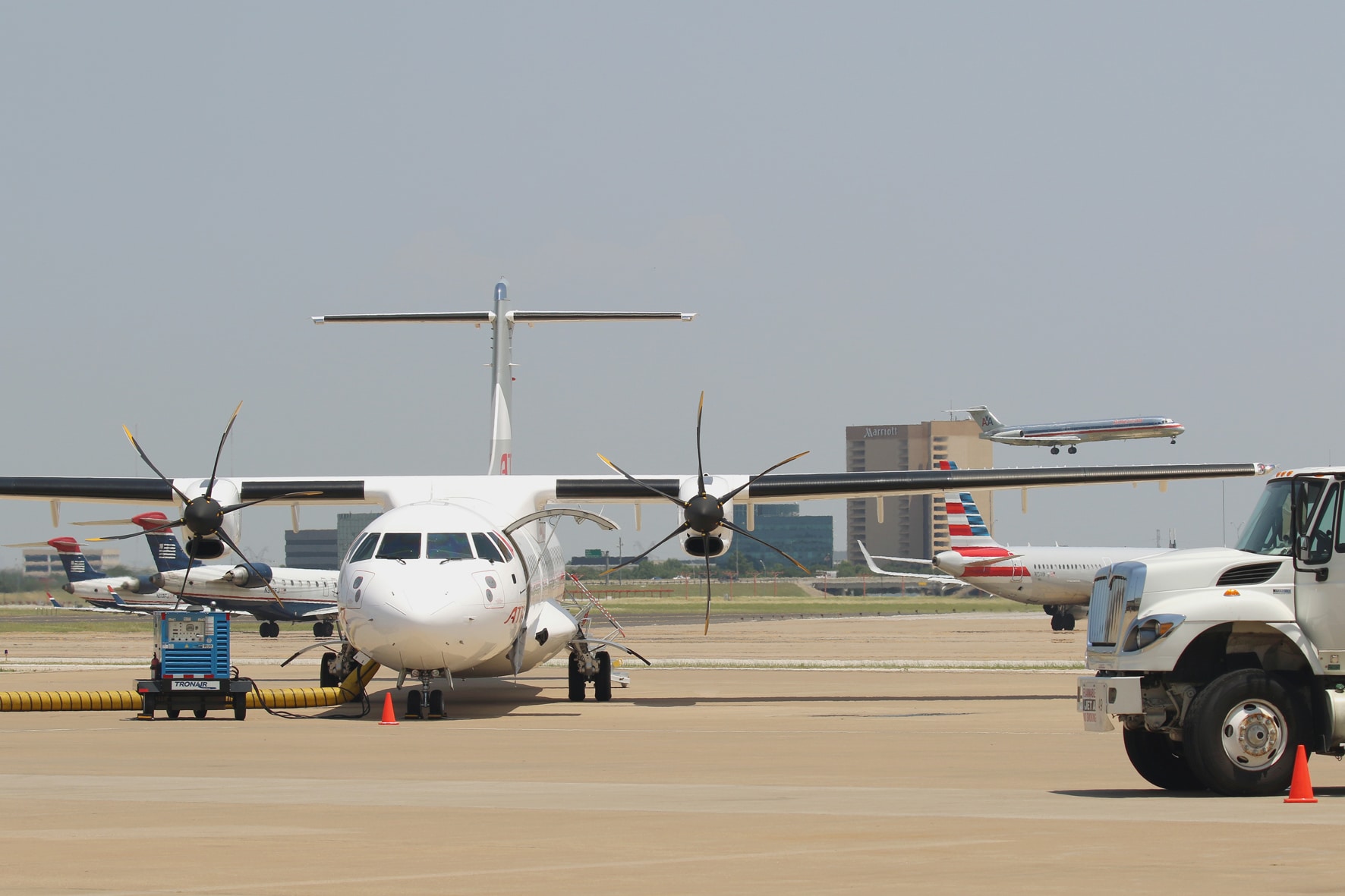
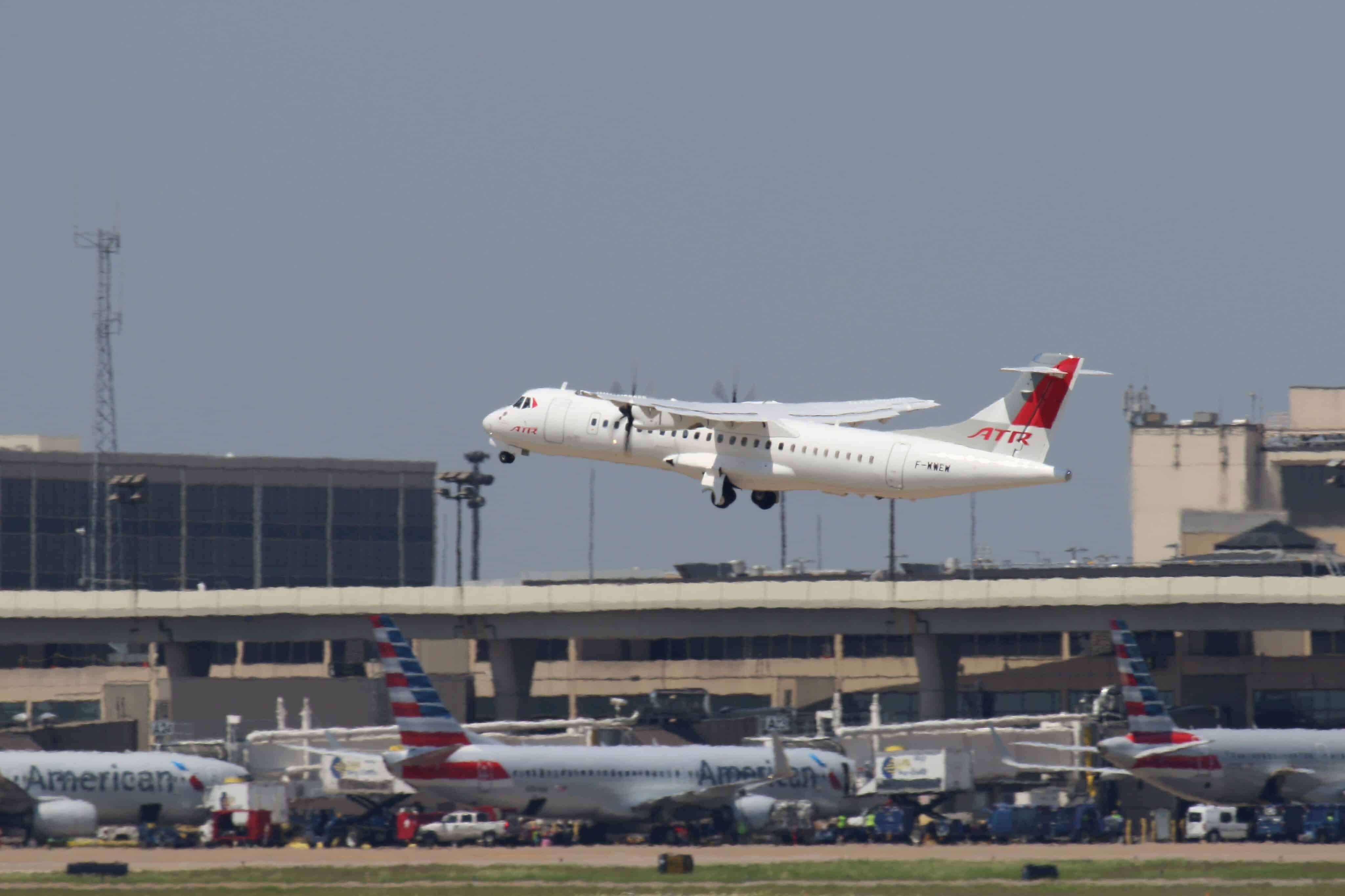
What we do say, however, is that today, ATR offers the only new-build aircraft specifically positioned to serve the retiring RJ50 segment. Our latest-generation turboprops are optimised for short-haul sectors, precisely the missions where regional connectivity is most fragile.

On routes under 400NM, ATR turboprops offer up to 30% lower fuel costs than equivalent regional jets.
Ironically, deploying ATR turboprop aircraft on shorter sectors may also be the best way to limit CRJ and ERJ cycles, extend the life of the fleets, and ensure regional aviation continues to serve even the smallest US communities.

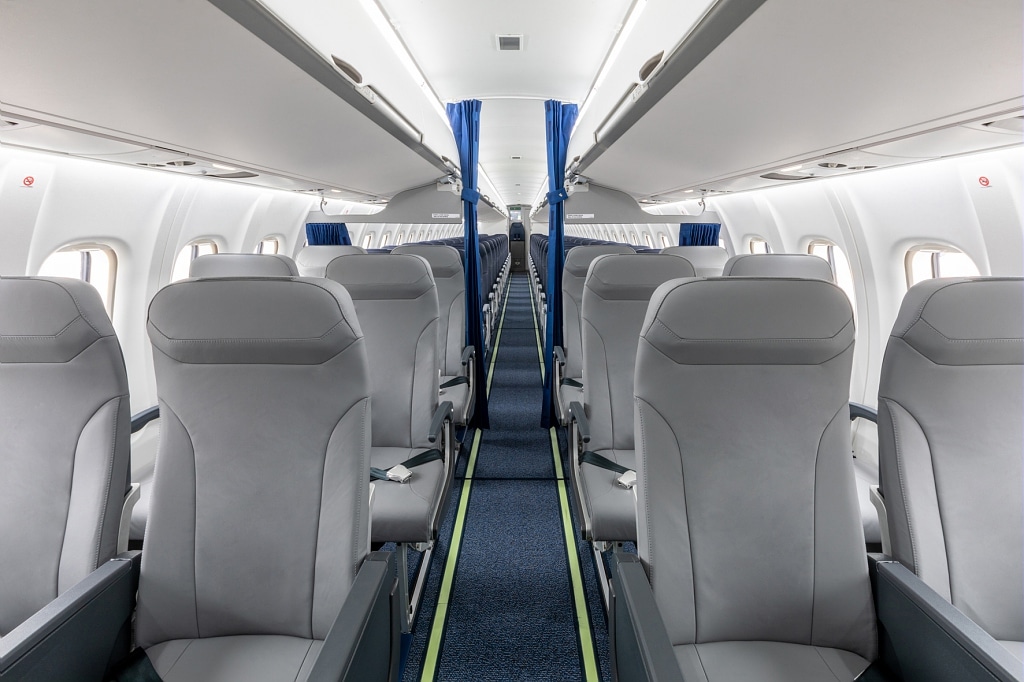
With a modern three-class cabin, high-speed internet connectivity, and full-size carry-on capacity for every traveler, the passenger experience aligns with today’s expectations, while maintaining the economics required for route viability.
Looking ahead, the ATR EVO concept roadmap targets entry into service around 2035, introducing hybrid-electric propulsion technologies to further reduce environmental impact and operating costs.
Rebuilding What Was Lost
American aviation has a great opportunity, not simply to replace retiring jets, but to rethink regional mobility across the country.
Regional aviation has historically played a central role in connecting smaller U.S. communities to major hubs and economic centres. With the appropriate aircraft adapted to today’s market realities, existing connections can be sustained, lost connections can be restored, and new connections can be created. Reinvigorating regional aviation in the United States is not about returning to the past. It is about building a future where access to air service is maintained, local economies are supported, and air mobility remains available beyond the larger metropolitan areas.






Share this article